



Danyelol ha iniziato a leggere I promessi sposi di Alessandro Manzoni (Scrittori italiani di ieri e di oggi)


Questo collegamento si apre in una finestra pop-up
Completato! Danyelol ha letto 17 di 12 libri.

Vivere è un magnifico esercizio
— Patagonia express. Appunti dal sud del mondo (Pagina 104)
Non bisogna mai dimenticare gli amici. Anche se si trovano all’inferno, bisogna andare a trovarli.
— Patagonia express. Appunti dal sud del mondo (Pagina 78)
“E questo cielo? E tutte queste stelle? Sono un'altra bugia della Patagonia, Baldo?” “Che importa? In questa terra mentiamo per essere felici. Ma nessuno di noi confonde la bugia con l'inganno.”
— Patagonia express. Appunti dal sud del mondo (Pagina 36)
Navigheremo nella notte australe verso la fine del mondo, e quando alla luce della Croce del sud brinderò all’eterna salute del dannato inglese che se l'è svignata per primo, forse il vento mi porterà l'eco dei cavalli, montati da due vecchi gringo, che galoppano sul profilo incerto del litorale, in una regione così vasta e colma di avventure che non può essere toccata dalla meschina frontiera che separa la vita dalla morte.
— Patagonia express. Appunti dal sud del mondo (Pagina 18)
L'ho divorato in un pomeriggio. È stata la mia seconda lettura, mi è piaciuta più della prima. Avevo bisogno di leggere di terre lontane per ritrovare me stesso e per sognare. E poi è il libro che mi ha convinto a scrivere su una moleskine, avevo bisogno di una rinfrescata. Ti fa venire voglia di viaggiare, di conoscere gente con culture diverse e sentire storie, non importa se vere o semplici bugie.
L'ho divorato in un pomeriggio. È stata la mia seconda lettura, mi è piaciuta più della prima. Avevo bisogno di leggere di terre lontane per ritrovare me stesso e per sognare. E poi è il libro che mi ha convinto a scrivere su una moleskine, avevo bisogno di una rinfrescata. Ti fa venire voglia di viaggiare, di conoscere gente con culture diverse e sentire storie, non importa se vere o semplici bugie.
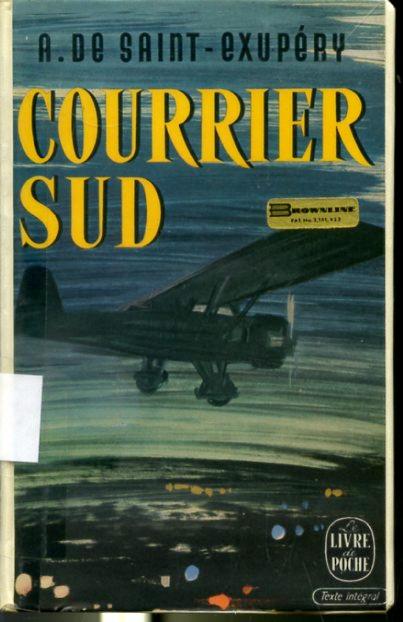
Courrier sud, translated as Southern Mail and Southern Carrier, is the first novel by Antoine …
Et ce printemps! Te souviens-tu de ce printemps après la pluie grise de Toulouse? Cet air si neuf qui circulait entre les choses. Chaque femme contenait un secret : un accent, un geste, une silence. Et toutes étaient désirables. Et puis, tu me connais, cette hâte de repartir, de chercher plus loin ce que je pressentais et ne comprenais pas, car j'étais ce sourcier dont le coudrier tremble et qu'il promène sur le monde jusqu'au trésor.
— Courrier sud di Antoine de Saint-Exupéry (Le livre de poche -- 177) (Pagina 42)
Courrier sud, translated as Southern Mail and Southern Carrier, is the first novel by Antoine …
Il avait craint de trouver les choses différentes et voici qu'il souffrait de les découvrir si semblables. Il n'attendait plus des rencontres, des amitiés qu'un ennui vague. De loin on imagine.
— Courrier sud di Antoine de Saint-Exupéry (Le livre de poche -- 177) (Pagina 40)
Courrier sud, translated as Southern Mail and Southern Carrier, is the first novel by Antoine …
Non mi ha fatto impazzire: trama praticamente nulla, anche lo stile di scrittura non mi ha appassionato, con tante cose non dette e da intuire. Per contro ho apprezzato davvero tanto le immagini poetiche create dall’autore. Proprio le immagini poetiche sono le parti più belle del libro, che ti fanno chiudere gli occhi e pensare e sognare. In più adoro questa edizione, il fascino del libro antico, con la carta ingiallita che dà una sensazione di calore.
Courrier sud, translated as Southern Mail and Southern Carrier, is the first novel by Antoine de Saint-Exupéry, published in 1929. …
Courrier sud, translated as Southern Mail and Southern Carrier, is the first novel by Antoine de Saint-Exupéry, published in 1929. …
Courrier sud, translated as Southern Mail and Southern Carrier, is the first novel by Antoine de Saint-Exupéry, published in 1929. …