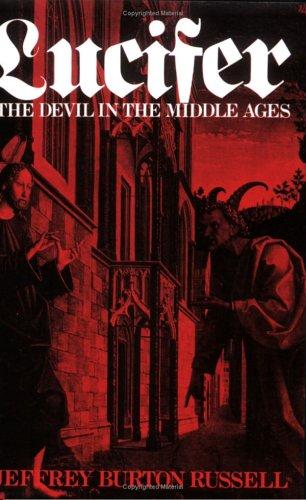
Evil is an intrinsically fascinating topic. In Lucifer, Jeffrey Burton Russell continues his compelling study …
"...Anselm's first assumption is traditional. Evil is nothing. But he proceeds to analyze this concept rationally. By saying that evil is nothing, he does not mean that the word evil is meaningless, but rather that the concept evil (not good) is identical to the concept nothing (not anything). Such negative concepts have meaning only when referred to a good and a something, as "not John" has meaning only when it refers to John. The word nothing refers only to what it negates. In the same way, the word evil refers only to the good that it negates. Total and complete evil is the same as total and complete nonbeing, the void..."
It is fascinating how Christian theologians throughout the centuries struggled with the question: "How can Evil exist in a universe created by an allegedly benevolent and omnipotent God"? This book has plenty of historical perspectives on this question - and #ttrpg players who have cosmic forces of Good and Evil in their campaigns could probably learn quite a few useful things from it.
It is fascinating how Christian theologians throughout the centuries struggled with the question: "How can Evil exist in a universe created by an allegedly benevolent and omnipotent God"? This book has plenty of historical perspectives on this question - and #ttrpg players who have cosmic forces of Good and Evil in their campaigns could probably learn quite a few useful things from it.
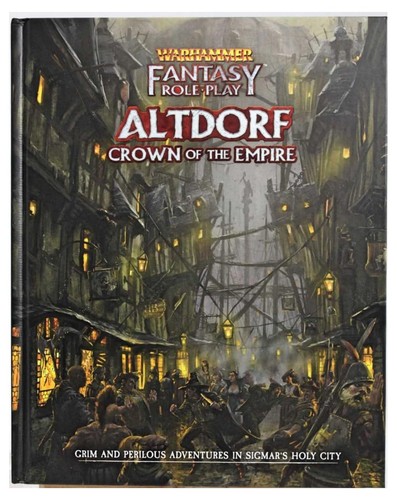
Altdorf is the capital city of the Empire and the birthplace of Sigmar Heldenhammer. It …
A good city book, but not a great one
4 stelle
I love detailed #ttrpg city books, and at 220 pages in length, Altdorf: Crown of the Empire for #WFRP certainly qualifies. As the capital city of the Empire, Altdorf is full of factions, power groups, NPCs with secrets, and lots of tiny neighborhoods - each with their own character, yet all feel plausible and believable for the setting of the Old World (well, maybe with a few exceptions - the "Popular League Against Nobility and Taxation (PLANT)" revolutionary group reads too much like something from the 20th century rather than the "German Renaissance" atmosphere the setting generally goes for).
So, why didn't I give this book full marks? It isn't for the bad puns in the German-sounding names - as a German WFRP player, I've learned to tolerate these. No, my problem is that this book doesn't really do enough to make its individual parts interconnected.
The setting …
I love detailed #ttrpg city books, and at 220 pages in length, Altdorf: Crown of the Empire for #WFRP certainly qualifies. As the capital city of the Empire, Altdorf is full of factions, power groups, NPCs with secrets, and lots of tiny neighborhoods - each with their own character, yet all feel plausible and believable for the setting of the Old World (well, maybe with a few exceptions - the "Popular League Against Nobility and Taxation (PLANT)" revolutionary group reads too much like something from the 20th century rather than the "German Renaissance" atmosphere the setting generally goes for).
So, why didn't I give this book full marks? It isn't for the bad puns in the German-sounding names - as a German WFRP player, I've learned to tolerate these. No, my problem is that this book doesn't really do enough to make its individual parts interconnected.
The setting of Ptolus, as usual, shows how to do this right: Each time a character, a place, an organization or something else has a connection to something done elsewhere, there's a page reference to where you fan find more. As a result, you get the feeling that the city - despite its fantastic nature - is an interconnected, organic whole. In contrast, while Altdorf has a long list of fascinating, atmospheric neighborhoods, they all too often feel as if they exist on their own, with connections to the rest of the city only being hinted at.
Nethertheless, a GM interested in running adventures or even entire campaigns in Altdorf will find plenty of useful material in this book. But they should put in some added effort to make this city feel alive.
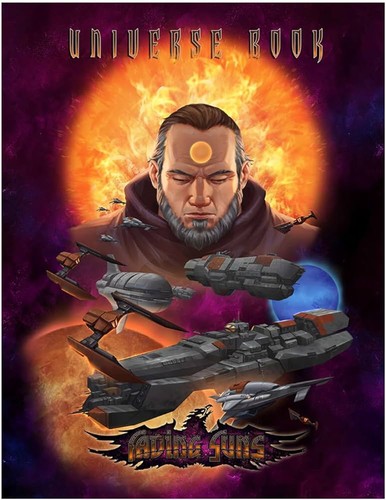
Fading Suns is probably my favorite "kitchen sink" #ttrpg setting. You can take pretty much any adventure, any story, from any genre - and make it fit the setting somehow. I can't think of any other setting that has this sheer breadth of possibilities.
Fading Suns is probably my favorite "kitchen sink" #ttrpg setting. You can take pretty much any adventure, any story, from any genre - and make it fit the setting somehow. I can't think of any other setting that has this sheer breadth of possibilities.
Enter the Kingdom of Brancalonia, a land full of pitfalls and money-making opportunities. Create your …
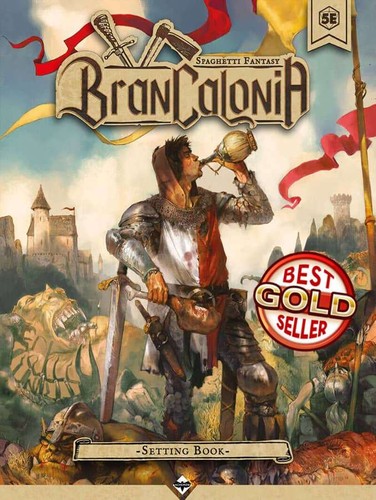
I've became interested in the world of Brancalonia as a quirky, folklore-themed #ttrpg setting when it was first released. And now that I've actually started to learn #Italian , my attention has increased - my plan is to read the Italian-language originals of these books once I'm a bit firmer in the language.
Still, I'm not quite happy with the rules for this setting. I mean, I do understand why they picked the 5E version of #DnD , but limiting character growth to 5th level doesn't really make for a great fit. I'd rather use an entirely different rule system that's a better fit for lower-powered protagonists, such as #WFRP , instead of trying to turn the D&D rules into something they are not.
I've became interested in the world of Brancalonia as a quirky, folklore-themed #ttrpg setting when it was first released. And now that I've actually started to learn #Italian , my attention has increased - my plan is to read the Italian-language originals of these books once I'm a bit firmer in the language.
Still, I'm not quite happy with the rules for this setting. I mean, I do understand why they picked the 5E version of #DnD , but limiting character growth to 5th level doesn't really make for a great fit. I'd rather use an entirely different rule system that's a better fit for lower-powered protagonists, such as #WFRP , instead of trying to turn the D&D rules into something they are not.
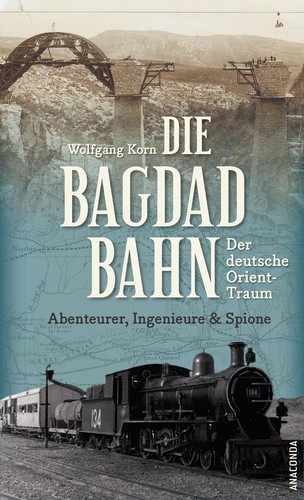
The #Pathfinder#ttrpg setting I am developing does have railroads, so reading up about the challenges (and politics) of building railroads in the 19th and early 20th centuries will be helpful. This book about the construction of the Baghdad Railroad should therefore be rather instructive...
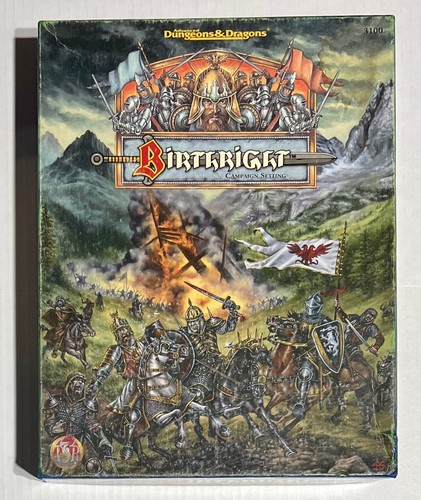
Birthright was another one of those #dnd settings that fall under "great concept, bad rules". The idea of player characters starting out as the rulers of their own domain was and is awesome (although I've grown a bit leery about the whole "Divine Right of Kings" thing - but I can let that slide for a good story). However, the rules for managing domains and fighting armies were a mess, and would involve more spreadsheets than I want to bother with for recreational gaming.
If I were to run a #ttrpg campaign in this setting, I'd probably use @GregStolze@mastodon.social 's Reign (with bits of Wild Talents thrown in for the birthright powers) - rules for running domains (or "companies") are integrated into the ruleset from the start, and they are also much more scaleable - if you plan to conquer all of Anuire, this should be much less of …
Birthright was another one of those #dnd settings that fall under "great concept, bad rules". The idea of player characters starting out as the rulers of their own domain was and is awesome (although I've grown a bit leery about the whole "Divine Right of Kings" thing - but I can let that slide for a good story). However, the rules for managing domains and fighting armies were a mess, and would involve more spreadsheets than I want to bother with for recreational gaming.
If I were to run a #ttrpg campaign in this setting, I'd probably use @GregStolze@mastodon.social 's Reign (with bits of Wild Talents thrown in for the birthright powers) - rules for running domains (or "companies") are integrated into the ruleset from the start, and they are also much more scaleable - if you plan to conquer all of Anuire, this should be much less of a headache.
Although I'd have to re-read the assorted magic rules of Reign to see if they have something similar in mood to what *Birthright offers (which is mostly D&D magic, but with some significant thematic differences from more "standard" campaign settings).
The early #d20 era of #dnd was wild. #TTRPG publishers would create a setting or a supplement on pretty much any conceivable topic and rush it to market, causing a massive glut of products. And, as a result, the quality of these products was... variable.
I've never really investigated how Hamunaptra: Egyptian Adventures rates in this regard, but the boxed set is still among my belongings.
The early #d20 era of #dnd was wild. #TTRPG publishers would create a setting or a supplement on pretty much any conceivable topic and rush it to market, causing a massive glut of products. And, as a result, the quality of these products was... variable.
I've never really investigated how Hamunaptra: Egyptian Adventures rates in this regard, but the boxed set is still among my belongings.
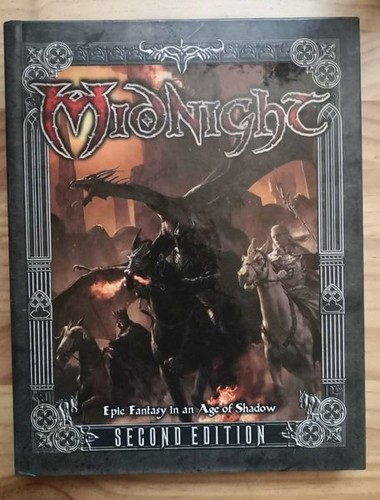
The Midnight#ttrpg setting for #dnd had an interesting premise: "What if Sauron had won the War of the Ring"? And I actually played a short campaign in it.
But ultimately, I found it too depressing - I prefer settings where there is actual hope. Heck, even Call of Cthulhu offered chances of victory, however temporary they might be - and an opportunity to escape the horrors, however brief.
The Midnight#ttrpg setting for #dnd had an interesting premise: "What if Sauron had won the War of the Ring"? And I actually played a short campaign in it.
But ultimately, I found it too depressing - I prefer settings where there is actual hope. Heck, even Call of Cthulhu offered chances of victory, however temporary they might be - and an opportunity to escape the horrors, however brief.
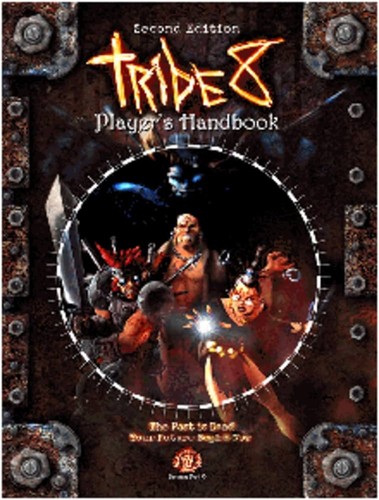
There are plenty of weird postapocalyptic #ttrpg settings out there, and Tribe 8 has to be one of the weirdest.
I do appreciate that, unlike with Dream Pod 9's Heavy Gear line, this book actually lays out the entire possible future metaplot in advance - not in much detail, but enough for a GM to work with.
There are plenty of weird postapocalyptic #ttrpg settings out there, and Tribe 8 has to be one of the weirdest.
I do appreciate that, unlike with Dream Pod 9's Heavy Gear line, this book actually lays out the entire possible future metaplot in advance - not in much detail, but enough for a GM to work with.
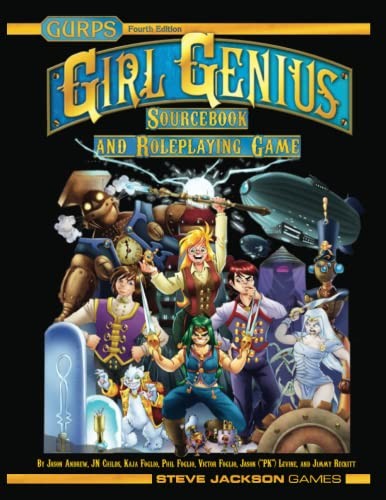
Considering the over-the-top action of the comics, the character stat blocks in GURPS Girl Genius were surprisingly down-to-earth. While the main protagonists are indeed powerful, they are still fairly reasonable, and not out of the range of "pulp action heroes" and the like. #GURPS#ttrpg
Considering the over-the-top action of the comics, the character stat blocks in GURPS Girl Genius were surprisingly down-to-earth. While the main protagonists are indeed powerful, they are still fairly reasonable, and not out of the range of "pulp action heroes" and the like. #GURPS#ttrpg
I have sold of much of my physical collection of #ttrpg books. But I am still reluctant to part with my copy of the first Forgotten Realms Campaign Set... #dnd
In dark forests and forlorn mountains, by black lakes and hidden groves. At your doorstep. …
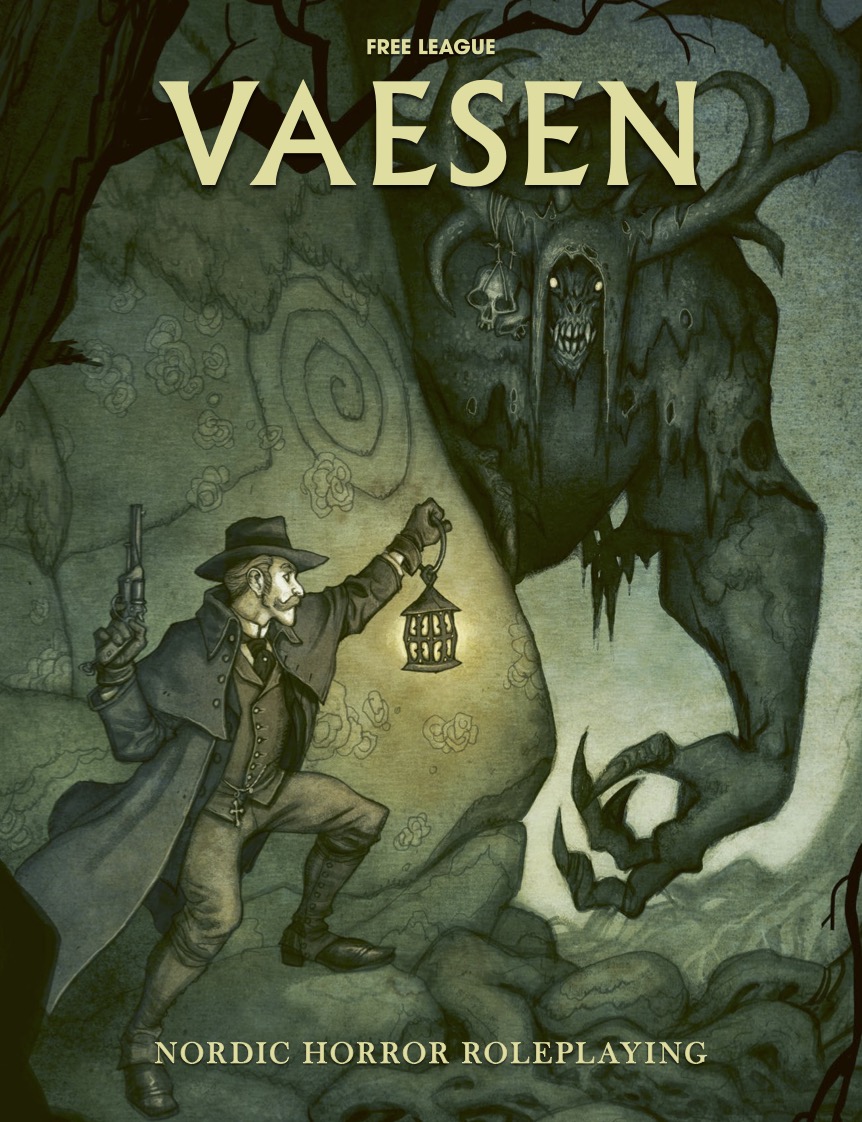
Vaesen is a game that should be right up my alley, considering it's a #ttrpg based on European #folklore and set in the 19th century - i.e. the topic and time I am studying myself.
Alas, so far I have been unable to find the time to actually read it. But hey - if anyone wants to write a Germany sourcebook for it, I am available as an expert consultant. 😉
Vaesen is a game that should be right up my alley, considering it's a #ttrpg based on European #folklore and set in the 19th century - i.e. the topic and time I am studying myself.
Alas, so far I have been unable to find the time to actually read it. But hey - if anyone wants to write a Germany sourcebook for it, I am available as an expert consultant. 😉
Most #dnd / fantasy #ttrpg settings out there seem to be vaguely based on Europe and European cultural assumptions.
However, most religious conflict in these settings seems to be based on conflicts between the followers of different gods. What I'd like to see more examples of is conflict between followers of the same god(s) who interpret their faiths differenty.
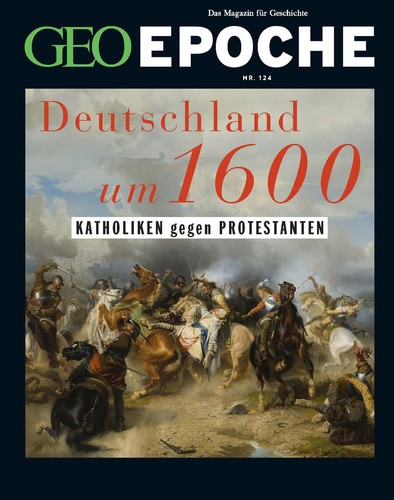
I mean, consider the conflict between Catholics and Lutherans in early modern Germany, which ultimately led to the Thirty Years's War - arguably the most traumatic war in the country's existence, eclipsing even the World Wars in many respects.
Such conflicts between different theological interpretations of the same faith have thus plenty of potential for conflict - and thus stories. However, you do need to make sure that the gods of your setting won't settle theological disputes directly...
Most #dnd / fantasy #ttrpg settings out there seem to be vaguely based on Europe and European cultural assumptions.
However, most religious conflict in these settings seems to be based on conflicts between the followers of different gods. What I'd like to see more examples of is conflict between followers of the same god(s) who interpret their faiths differenty.
I mean, consider the conflict between Catholics and Lutherans in early modern Germany, which ultimately led to the Thirty Years's War - arguably the most traumatic war in the country's existence, eclipsing even the World Wars in many respects.
Such conflicts between different theological interpretations of the same faith have thus plenty of potential for conflict - and thus stories. However, you do need to make sure that the gods of your setting won't settle theological disputes directly...
South of the forbidding Barrier Wall mountains lies a land of …
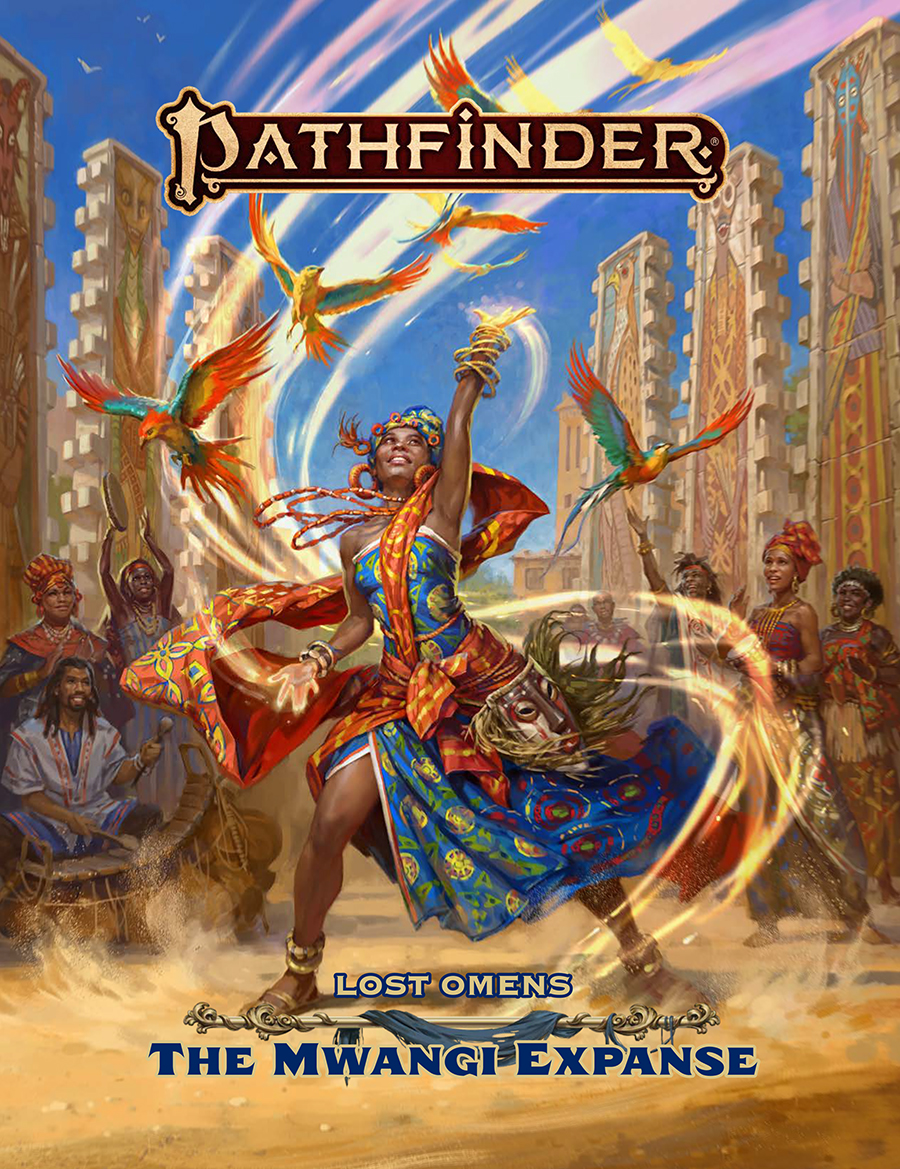
It's fair to say that this sourcebook on the "Mwangi Expanse" - the "not-Africa" region of Golarion, the setting of the #Pathfinder#ttrpg - is much better than the portrayal in the previous edition of Pathfinder, which drew upon lots of unfortunate "Dark Continent" tropes (including "Apartheit-era not-South Africa").
What I particularly liked that each region had its own cultural narrative - a story that served as its "founding myth" of sorts. This not only served as a cool bit of flavor, but also distinguished it from the more "conventional" regions north of the Inner Sea.
It's fair to say that this sourcebook on the "Mwangi Expanse" - the "not-Africa" region of Golarion, the setting of the #Pathfinder#ttrpg - is much better than the portrayal in the previous edition of Pathfinder, which drew upon lots of unfortunate "Dark Continent" tropes (including "Apartheit-era not-South Africa").
What I particularly liked that each region had its own cultural narrative - a story that served as its "founding myth" of sorts. This not only served as a cool bit of flavor, but also distinguished it from the more "conventional" regions north of the Inner Sea.